
Why 800V Charging Matters for South African EV Drivers
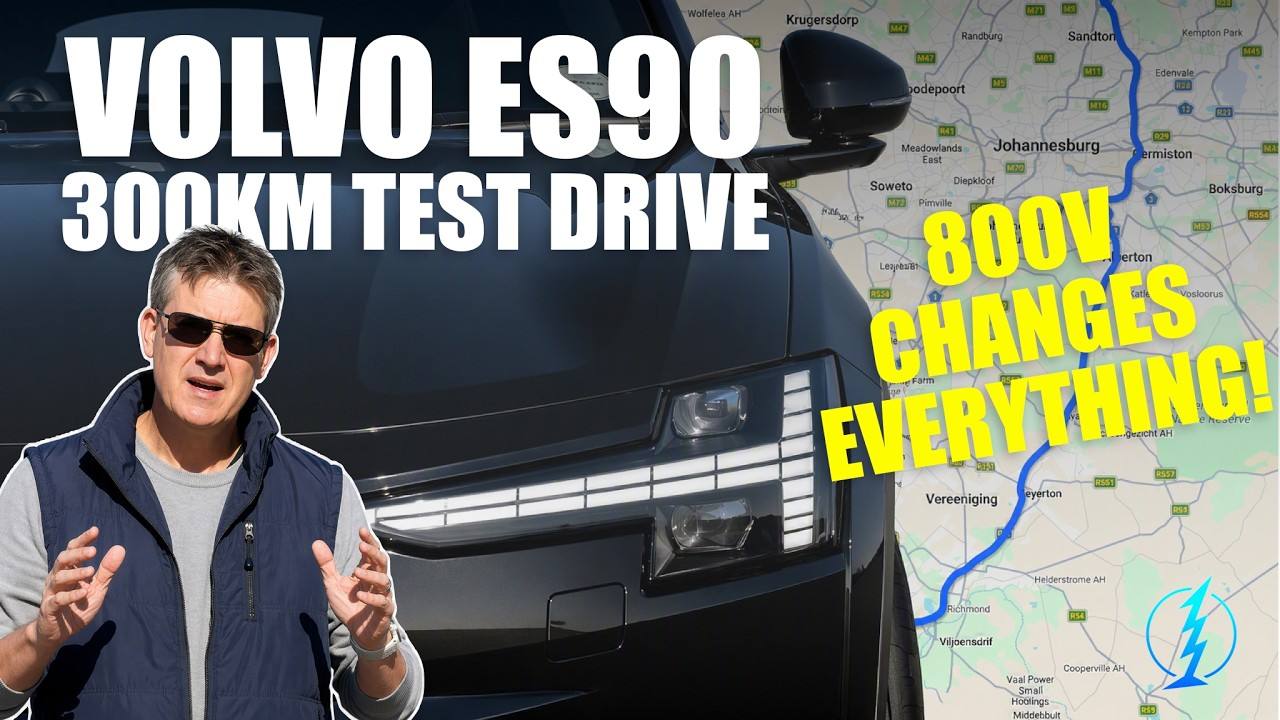
Greg Cress explains the simple physics behind 800V EV charging, why it matters for the Volvo ES90, and why South African charging infrastructure is moving in this direction.
On this page
Quick answer
800V matters because it lets an EV move more charging power with less current, and less heat generation. That sounds technical, but the basic idea is simple: power equals voltage times current.
If the voltage stays low and you want more charging power, the current has to rise dramatically. Higher levels of current means thicker cables, more heat, more cooling required, and ultimately more energy loss. Increase the voltage, and the same charging power can be delivered with roughly half the current.
That is why 800V cars like the Volvo ES90 are important. They are not only designed for the chargers we have today. They are designed for the ultra-fast charging infrastructure that is starting to arrive. They are a signal of the future, even if that future is unevenly distributed today.
The basic physics
The useful formula is:
Power = voltage x current
If you want 50kW from a 400V system, the current required is:
50,000 watts / 400 volts = 125 amps.
That is manageable.
But if you want 300 kW from the same 400V system, the current requirement is:
300,000 watts / 400 volts = 750 amps.
That is an enormous amount of current. At that level, the cable becomes thicker, heavier, and hotter. Cooling becomes more difficult. Energy loss management becomes more important. The charging system has to work much harder to maintain that speed, which means the charger becomes more expensive as well.
Think of it like pushing too much water through a small pipe. Eventually, friction becomes the problem.
What changes at 800V
At 800V, the same 300 kW charging power needs about half the current:
300,000 watts / 800 volts = 375 amps.
That is the real benefit. Double the voltage and, for the same power, you roughly halve the current.
The immediate advantages are:
- less heat generation,
- thinner and lighter cables,
- lower energy loss,
- faster high-power charging,
- and better overall system efficiency.
This is why the ES90 is such an important step for Volvo. Volvo says the ES90 is its first fully electric model to use 800V technology, with the ability to add up to 300km of range in 10 minutes at 350 kW fast-charging stations under the right conditions.
Why this matters in South Africa
The current South African reality is that you will not always see the full benefit of an 800V car today. Many public DC chargers still operate well below the 300 kW level, with the fastest Eskom-connected chargers maxing out at 200kW. GridCars, for example, publishes integrated DC charger configurations from 60 kW to 150 kW (but have 600KW+ charging technology on the horizon), and Rubicon’s public charging map is where drivers check individual station speed, connector type, and availability. The fastest Rubicon EV charger for passenger vehicles is currently the 200kW DC Charger at the Mall of Africa in Waterfall, Johannesburg.
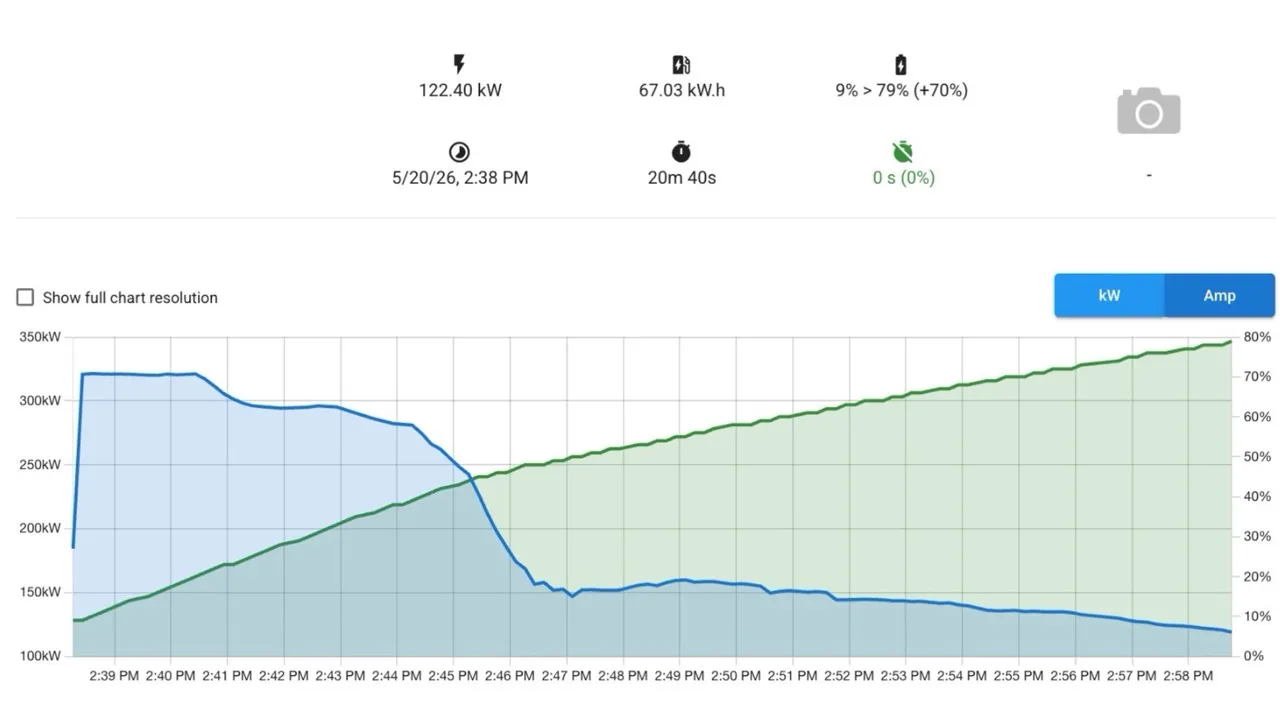
That does not make 800V irrelevant, what it means is that the car is ready for the next layer of infrastructure when it comes. The Volvo ES90 recently broke the DC Charge speed record in South Africa at a Zero Carbon Charge off-grid station by reaching a top charging speed of 321kW, recharging from 10% - 80% in 20 mins, adding 67kWh and approximately 400kms of range.
As more ultra-fast chargers are added to the network, 800V vehicles should be able to use more of that available power. The benefit will show up most clearly on longer trips, where the difference between a short, efficient top-up and a long wait can change the whole experience.
For South Africa, that matters. We need EVs to work beyond the city commute. We need them to work on the N3, on route to lodges, on business trips, and on the kind of drives where people currently ask whether an EV is practical at all.
The 4G to 5G comparison
The move from 400V to 800V reminds me of the move from 4G to 5G.
The old system does not disappear. It still works. But the new system unlocks capabilities that were not practical before.
That is the right way to think about 800V charging. A 400V EV can still be a very good EV. A 60 kW or 150 kW charger can still be useful. But once the car and the charger can both operate at much higher power, the whole road-trip calculation starts to change.
What I would watch next
The important question is not only which cars have 800V architecture. It is whether the charger, the battery, the thermal system, and the software can all hold a useful charging curve in real conditions.
That is what we need to keep testing in South Africa:
- what charging speed the car actually reaches,
- how long it holds that speed,
- what the battery temperature does,
- what the stop costs,
- and whether the route becomes easier for a normal driver.
That is where the EV story becomes practical.
The headline number matters. The road-trip result matters more.
Related video
Watch the source story


About the author
Greg Cress
Electric One host
Greg brings practical South African road-trip experience and automotive and eMobility context to Electric One's EV explainers.
Evidence
Sources and disclosure
Based on Greg Cress's article text, the related Electric One video, and public references.
Editorial note: Greg-approved article text. Added-range wording corrected by Greg on 7 July 2026 before publication.
- The Volvo ES90 Explained: 800V Technology Meets A Real South African Road Trip
- Volvo Cars media release on ES90 800V technology
- GridCars integrated DC charger specifications
- Rubicon EV charging station network page
- CHARGE N3 off-grid EV charging network launch
- Audi South Africa on the Mall of Africa 200kW charger
- MyBroadband report on the Volvo ES90 South African charging record
- Engineering News report on GridCars ultrafast charging plans
Keep reading
Related Insights

Are Electric Cars Ready for South Africa? A Practical Buyer’s Guide
Greg Cress explains how South African drivers can decide whether an electric car fits their home charging, daily routes, road trips, running costs, and ownership plans.
The Lexus RZ’s Quiet Revolution
Clynton Yon speaks to Greg Cress about the Lexus RZ, EV ownership, charging habits, and why the transition to electric mobility can be easier than first-time drivers expect.
Continue the conversation
Ask Electric One a practical EV question.
Send a follow-up, correction, or topic idea for a future Insight.